Head of Department
Géza Ódor
Tel: +(36-1)-392 2222 / 3660
E-mail: odor.geza@ek.hun-ren.hu
Researchers in the Complex Systems Laboratory use the methods of statistical physics to investigate evolutionary game theoretic models and dynamic phenomena on various graphs. These models offer a general mathematical background to multidisciplinary research areas (biology, economics, behaviour research, surface growth, reaction-diffusion,… etc.).
- In evolutionary game theory they use mathematical models to pursue investigations to explore processes, strategies and relationship systems, developing between selfish individuals, which support cooperation advantageous for the community. Among the punitive strategies they have found variations that efficiently help the prevalence of a behaviour representing the common interest in spatial “Tragedy of the commons” games. Model studies also justified the communal usefulness of exchanging information that comes at a cost, if a sufficient number of players willing to sacrifice are present in the community.
- In evolutionary game theoretic models depth analysis is based on the ability to decompose interactions described in matrix form into the linear combination of four basic games. Systematic investigation of the coordination components cast light on the existence of social trap situations which are similar to phase-changes known in solid-state physics.
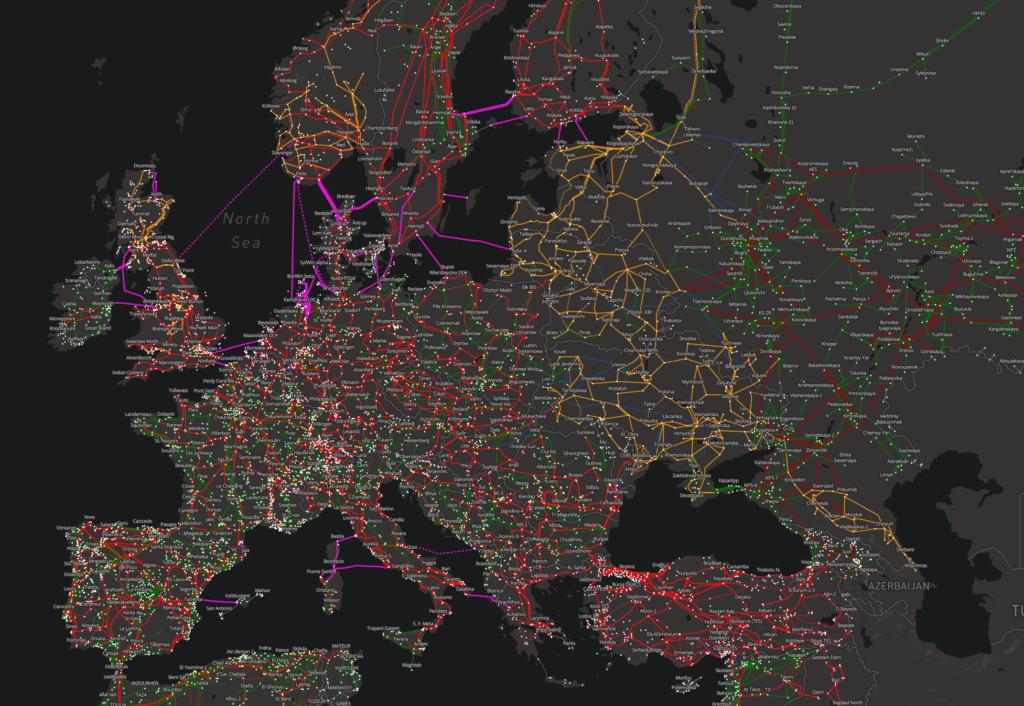
- They study the size and duration time distributions of avalanche-like failures in models developed for studying power grids and brain. Models, suitable to describe the spread of activity and synchronization are being used in synthetic and real modular networks to quantify the effects of the heterogeneity in networks of the critical dynamics of brain models.
https://www.energia.mta.hu/~szolnoki
https://www.energia.mta.hu/~odor
https://www.energia.mta.hu/~szabo
Our publications:
https://m2.mtmt.hu/gui2/?type=institutes&mode=browse&sel=institutes21866
Article summaries:
Spontaneous symmetry breaking of cooperation between species
Evolutionary dynamics of any multiplayer game on regular graphs
Frustrated Synchronization of the Kuramoto Model on Complex Networks
Scale-free behavior of weight distributions of connectomes
Studying power-grid synchronization with incremental refinement of model heterogeneity
Quantitative comparison of power grid reinforcements
Orthogonal elementary interactions for bimatrix games
Derivation of potential for group interactions in evolutionary games
Entanglement of evolutionary game theory and statistical physics
Evolutionary path from a prisoner’s dilemma to a harmony game via hawk–dove games
The colleagues of the department:
Géza Ódor, DSc., Scientific advisor – Head of department
Attila Szolnoki DSc.,Scientific advisor
Sangita Dutta, PhD
Balázs Király, PhD
Kristóf Benedek, PhD student, Scientific fellow
Michelle T. Cirunay PhD, Scientific fellow
György Szabó DSc., (retired, Prof. Emeritius)